Welcome to our Blog
Welcome to the blog of the Security in Mobility research group.
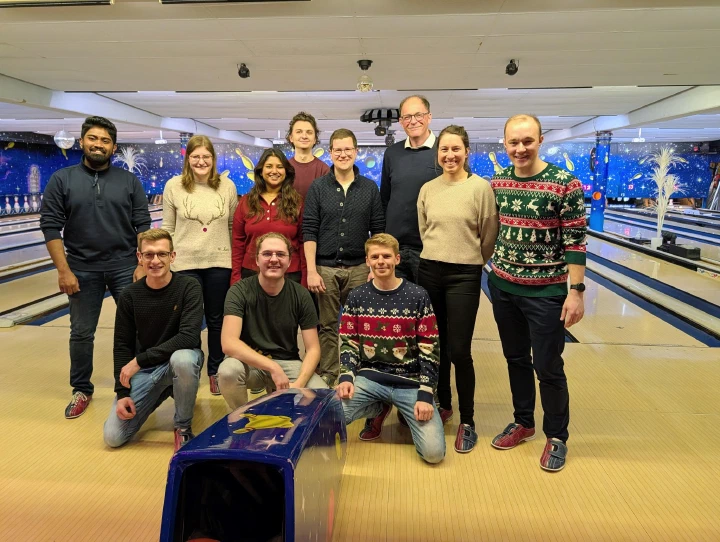
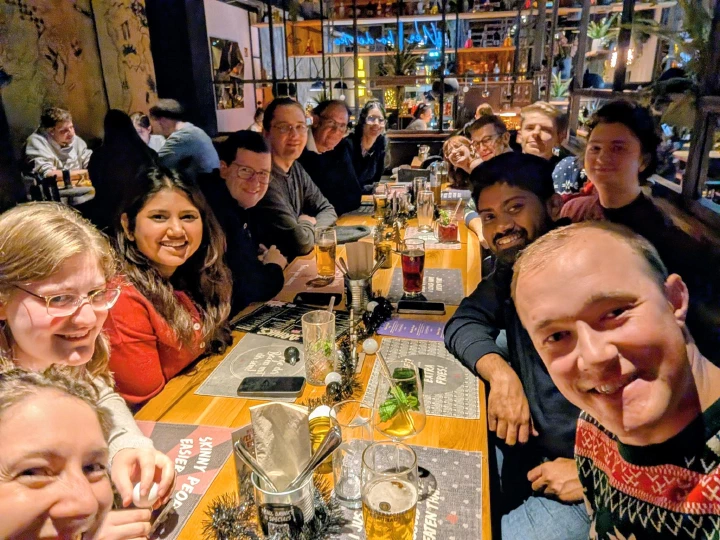
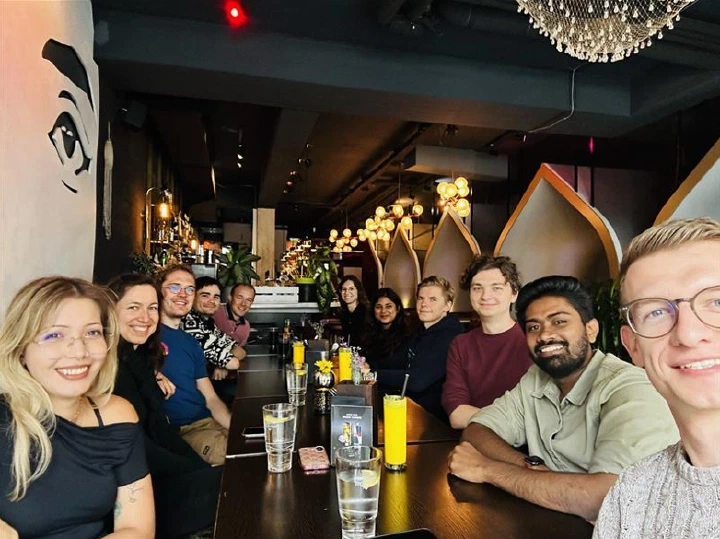
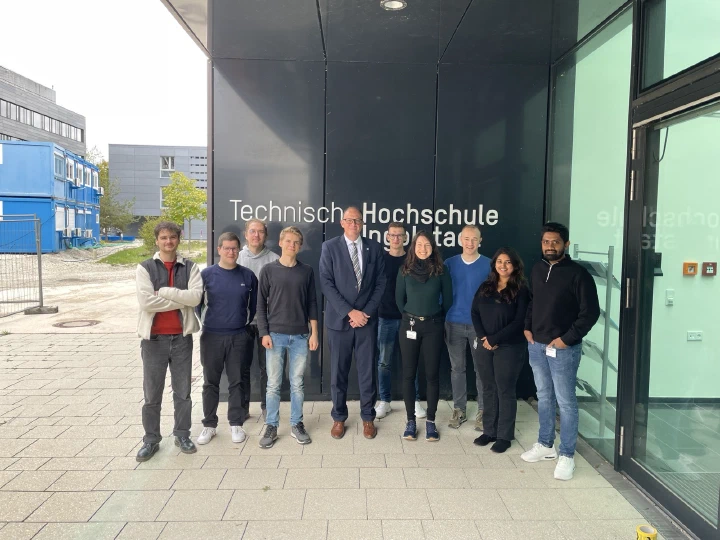
In this first post, we present our current team and give you a few insights into who we are and what we work on. But before we introduce each member individually, let us start with a look at the group as a whole.
Our group is part of the CARISSMA C-ECOS Institute at the THI and focuses on cybersecurity in the automotive domain. As modern vehicles grow increasingly connected and rely on ever more complex software systems, the potential attack surface expands accordingly, posing significant challenges to manufacturers, suppliers, and end users alike. Our research primarily addresses these challenges by investigating how security vulnerabilities can be systematically identified and mitigated across the full development and product lifecycle of a vehicle.
Our group currently consists of 15 members, including 12 researchers and three professors. In the following, we want to give you an overview of the projects our researchers are working on and the academic backgrounds our members bring to the group.
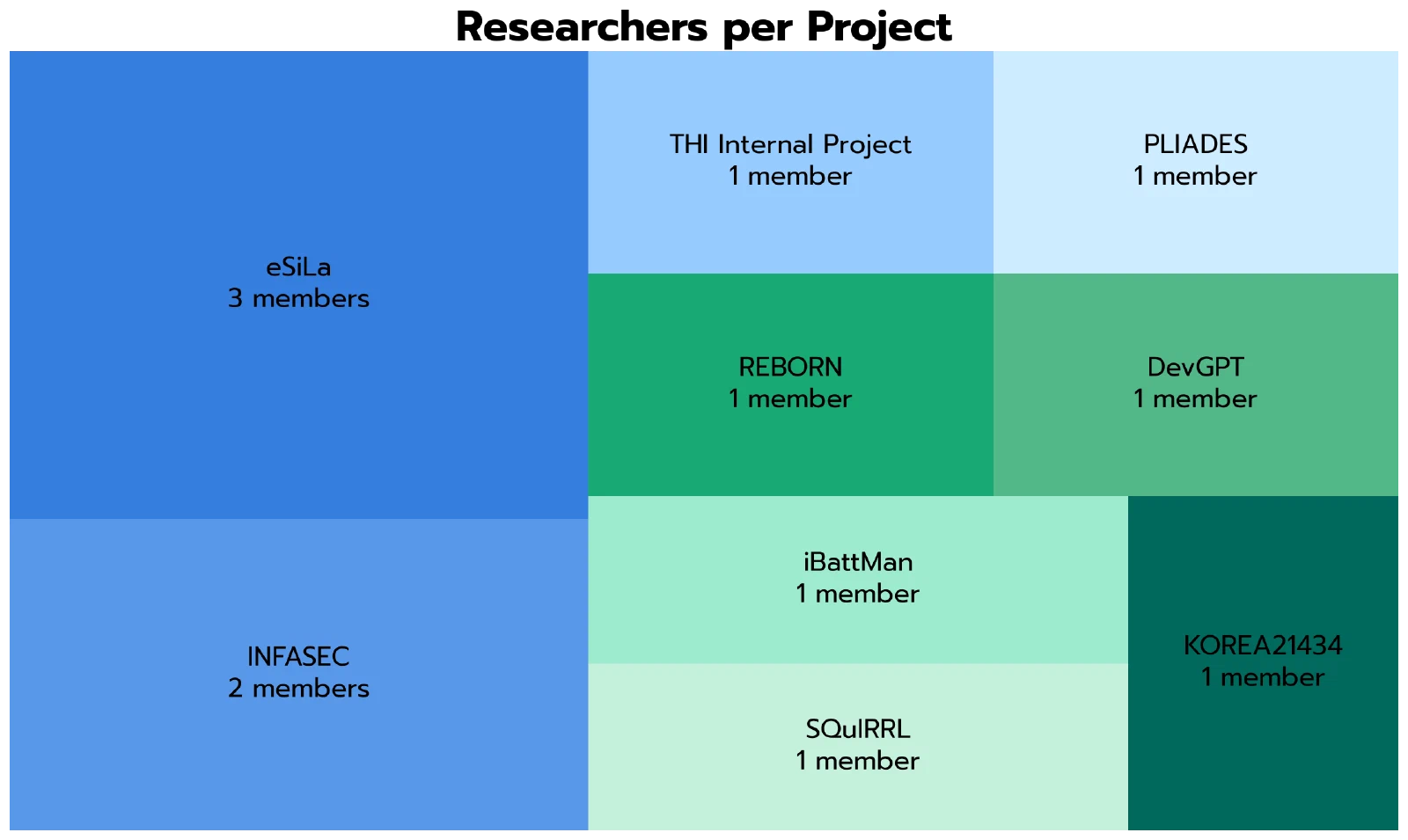

Having introduced the group as a whole, we would now like to give each of our members the spotlight they deserve. Below you will get to know each of them individually, in chronological order of joining the research group.
Prof. Dr.-Ing. Hans-Joachim Hof founded the research group
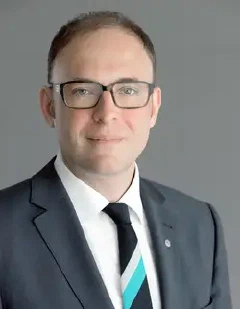
Dominik Bayerl joined the research group
Doctoral researcher Dominik works on a THI-funded project for Automotive Software Security and is partly involved in the Infasec project for Automotive Forensics. In his PhD, he focuses on improving static binary analysis using modern methods such as machine learning and Large Language Models. A self-declared night owl, he has not made peace with early mornings, which leaves him plenty of time at night to ponder questions such as why platypuses have no stomach. And if you ever find yourself with some spare time, ask him why siphons must be ventilated, he could go on for hours, unprompted.
The most surprising insight from his work: The best papers often start with a very simple idea or setup.
Tina Volkersdorfer joined the research group
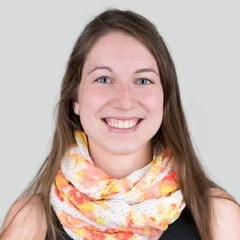
In her project PLIADES, doctoral researcher Tina focuses on security and privacy challenges, including traceability, threat analysis and risk assessment, and identity management across data spaces. Her PhD research extends this further, exploring how threat analysis for automotive risk assessment can be made more efficient and less prone to subjective interpretation. She believes that the most important habits a researcher can develop are simply getting started, discussing results regularly with a supervisor, and actively seeking feedback. At the same time, she has come to recognize that research can be hindered from the outside, whether by stakeholders withholding relevant data or by a lack of transparency in peer review.
Who shaped her thinking the most: Nutritionist Niko Rittenau and his clear communication of scientific findings and willingness to revise his own positions in light of new evidence.
Alumni Marco Michl joined the research group for 4 years
Julian Blümke joined the research group
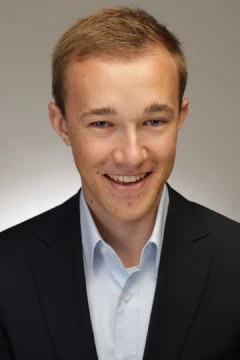
Doctoral researcher Julian works on the project REBORN where he is focused on developing a security architecture for a battery system, both for communication within the battery and for the interface between the battery and a cloud server, as well as the secure transition of the battery management system from its first to its second life. What surprised him most about working in research is how much of his time goes into communication and persuasion, convincing stakeholders outside the security sector of the necessity of security features. He would advise anyone starting out to get their academic tool chain clear and set up before diving into their work. And when it comes to research, he keeps in mind that all that glitters is not gold.
His research as a film genre: A mix of documentary, drama, tragedy, comedy, and hopefully something with a happy ending.
Jakob Löw joined the research group
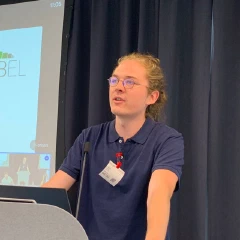
Jakob is a doctoral researcher in the group and works on the eSiLa project, where he focuses on the cybersecurity of communication between electric vehicles and charging stations. Given his research topic, it comes as no surprise that he could talk about ISO15118 for hours. He believes the peer review process at most conferences is not a reliable system for identifying good papers, a view shared by many but rarely said out loud. When it comes to advice for his younger self, he keeps it simple: find a topic you enjoy, for example charging stations. The best decision of his academic career was choosing the Applied Research Master over a conventional Computer Science Master.
The tool he would abolish immediately: Authega.
Alumni Prof. Dr.-Ing. Kevin Mayer joined the research group for 2 years
Professor Patrizia Heinl joined the research group
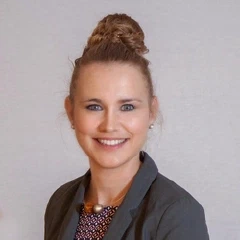
Professor Heinl holds an Assistant Professorship within the structured doctoral track. Her research focuses on the security of artificial intelligence (AI), with a current emphasis on AI-assisted applications in healthcare. She currently teaches courses, primarily focused on the intersection of cybersecurity and artificial intelligence alongside seminars and a practical lab. Beyond teaching, Professor Heinl actively shapes her research field through grant proposals, international conference presentations, and close collaboration with partners from academia, industry, and clinical practice. Her transfer work includes building the Digital Medicine Lab and creating formats that bring different stakeholders together to exchange knowledge, structure emerging topics, and identify practical requirements. One of the most important decisions in her academic career was founding the German Informatics Society (GI) working group on Digital Security in Healthcare. The group brings together people from different disciplines and creates a space for discussion, collaboration, and the development of new practical relevant research ideas. This exchange reflects what she values most in research: every new insight opens up further questions, and this constant process of discovery is what keeps the work meaningful and engaging.
Her advice to her younger self: Do not wait for the perfect moment. Stay persistent, share ideas early, and seek feedback from a broad and critical audience.
Alumni Jenny Hofbauer joined the research group for 2 years
Lukas Eder joined the research group
Lukas works as a research associate in the group on the eSiLa project, focusing on the IT security of communication between electric vehicles and charging stations during fast charging. His advice for anyone starting out is to do the literature review properly and in depth first, as good solutions to many problems already exist. He considers joining the Security in Mobility research group one of the best decisions of his academic career. If he could get rid of one method, it would be Powerline communication and the SLAC process it necessitates in ISO 15118 charging communication. He points to Deep Work by Cal Newport as a book that has shaped his thinking.
What he could talk about for hours: Why battery-electric drives are, and will continue to be, the standard solution for cars and trucks.
Vishwa Vasu joined the research group
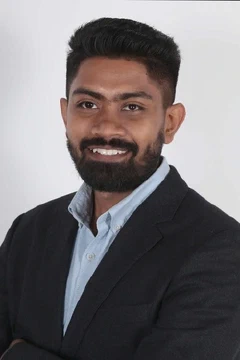
Doctoral researcher Vasu also works on the eSiLa project, where he investigates how the communication interface between electric vehicles and charging infrastructure can be attacked, monitored, and hardened. As a former SOC analyst, he brings a practical perspective to his research that helps him understand security problems on a deeper level. He did not expect communication and patience to play such a central role in his work, as research rarely moves in a straight line. His advice is to document everything from the beginning, because the path to a result matters just as much as the result itself, which is also why he thinks negative results and failed experiments deserve more recognition. He adds that cybersecurity is ultimately about more than attacks and tools, as the most interesting problems tend to appear where technology and human decisions meet.
What keeps him awake at night: How many small decisions shape the direction of a life, rather than a single big event. A chain of tiny questions that suddenly feel very important when everything is quiet.
Parul Gupta joined the research group
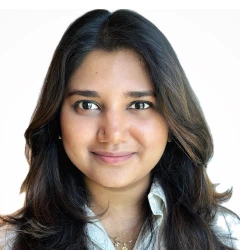
As a doctoral researcher, Parul leads the cybersecurity work package of DevGPT, working on automated secure code generation. She believes that careful thinking, honest uncertainty, and well-documented failure deserve more recognition in research, as a large part of the work is learning to ask the right question rather than rushing toward an answer. Very often, someone else’s uncertainty opens a perspective you had not considered, which is why staying open, listening carefully, and learning from those around you are skills she now sees as just as essential as technical expertise, as well as resilience. And if she could get rid of one thing, it would not be a tool or method, but the phrase “this should be straightforward,” which in her experience is precisely when hidden assumptions and unexpected challenges appear.
The most surprising insight from her work: Research problems are a bit like IKEA furniture. At first everything looks manageable, but halfway through something does not fit, a part seems to be missing, and you find yourself questioning your life choices.
Claudius Laves joined the research group
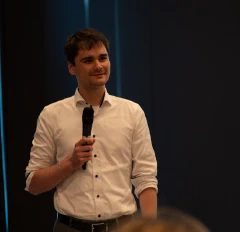
Claudius works on the EU-funded iBattMan project as a doctoral researcher, where he develops new cybersecurity concepts for next-generation Battery Management Systems. He is candid about his reservations when it comes to Systematic Literature Reviews, acknowledging that while they are necessary and valuable, he has not warmed up to the method just yet. By nature a night owl, working full-time has taught him to rise early so he can make the most of his afternoons and evenings. When asked what advice he would give his younger self, he laughs off the question, saying it feels like he is still at the beginning of his academic career himself and hoping his future self will magically appear with some tips.
The best decision in his academic career: Taking opportunities and not chickening out.
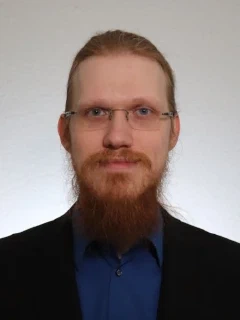
Prof. Dr. Thomas Hutzelmann joined the research group
Julienne Eder joined the research group
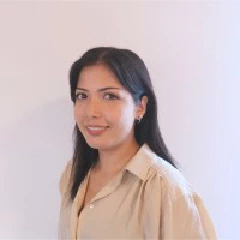
Research associate Julienne works on the INFASEC project, where she develops an AI-assisted tool for creating accident reports, with a particular focus on the bias that can influence such assessments. A skill she did not expect to need in her work as much is economic thinking. She believes that AI should not be deployed without careful consideration of its societal implications, a perspective that actively shapes her own work and that she engages with critically, given how central AI is to her research. And when it comes to books that have shaped her thinking, she points to Anne of Green Gables by Lucy Maud Montgomery.
Her research as a film genre: Drama.
Lea Achter joined the research group
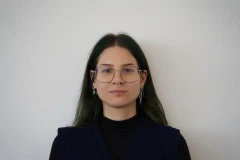
Lea Achter is a researcher whose work focuses on the explainability of AI tools and agents in digital vehicle forensics, as part of the INFASEC project. She believes that success in research is less about what you already know and more about how quickly you can learn something new. One thing that has shaped how she thinks about her work is the many women who never made it into textbooks, despite having laid the very foundations we build on today. When she’s not working, she describes herself as a night owl, fighting it with varying degrees of success.
Her research as a film genre: Slow burn romance, requiring patience, but ultimately rewarding.
Henning Ullrich joined the research group
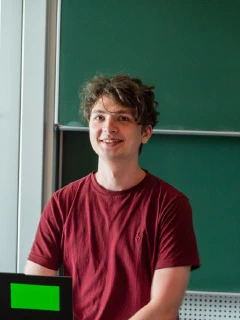
As a research associate in the group, Henning works on SQuIRRL, a project investigating the integration of Quantum Key Distribution in highly dynamic environments, where he focuses specifically on the automotive domain. If he could get rid of one method, it would be requirement engineering, as he sees the value in it but finds the process of writing requirements down meticulous and time-intensive. His advice for his younger self would be to do more things together with fellow students, because learning alongside others is always easier.
Skills he did not expect to need: Proper organisation and documentation of thoughts and ideas, which has turned out to be more demanding than expected.
Virginia Schellenberg joined the research group
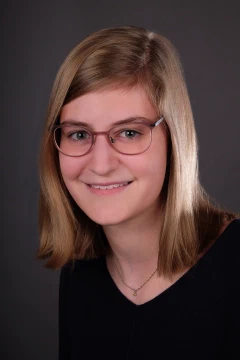
Virginia is a research associate in the group, with KOREA21434 as her main project. In her work, she focuses on LLM-based multi-agent systems, applying them both to the automated penetration testing of vehicles and to the implementation of a RAG system using AI agents. She did not expect communication skills and a confident presence to play such a significant role in her day-to-day work, but has come to see them as just as important as technical expertise. Looking back, she considers completing her Master’s directly after her Bachelor’s one of the best decisions she made, as it kept her momentum going. What she did not anticipate, however, is how quickly three years will probably go by when working on a dissertation.
One advice for her younger self: Believe in yourself and never give up. Looking back, everything was manageable, even when it did not seem that way at the time. And attend a few more lectures while you can.
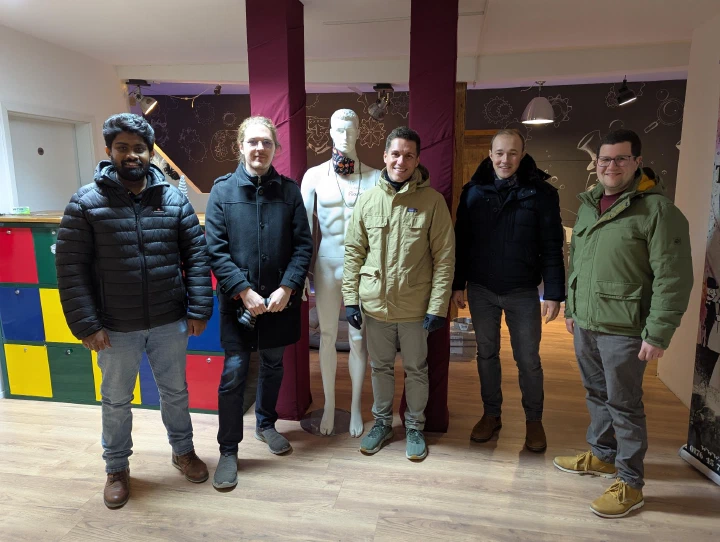
We hope this gives you a first impression of who we are. Our next post will be out next month, and for further updates you can also follow Professor Hof’s newsletter on LinkedIn. Before you go, here is a little snapshot of our group.